Advances in dental materials, lab techniques, and clinical workflows have transformed dentures from basic replacements into carefully engineered prosthetics that restore function and confidence. Removable dentures remain an excellent option for many patients who want a predictable, non-invasive way to rebuild a complete smile. While dental implants and fixed bridgework are excellent choices for some situations, modern removable dentures can deliver attractive, comfortable, and reliable results when designed and fitted with skill.
At Corona Family Dental, we focus on creating dentures that look natural, support facial contours, and let patients speak, smile, and eat with ease. Every denture we make begins with a thorough evaluation of oral health and personal goals, so the result fits both your mouth and your lifestyle. Our approach balances practical function with an attention to aesthetics and long-term tissue health.
We aim to help patients make informed decisions about tooth replacement. Throughout this page you’ll find plainspoken explanations of how missing teeth affect your oral health, the different types of dentures available, what the treatment process looks like, and practical advice for wearing and caring for your prosthesis.
Tooth loss is common and can affect adults at any age. Beyond the visible gap in your smile, missing teeth can alter the way your jaw functions, change dental alignment, and affect the soft tissues that shape your face. These changes can make it harder to chew certain foods and may affect speech clarity over time.
Physically, a missing tooth leaves the surrounding bone and gum without the stimulation they once received. Over months and years this leads to gradual remodeling of the jawbone and shifts in neighboring teeth, which can make future restorative work more complex. Psychologically, losing teeth often reduces a person’s willingness to smile or socialize freely—issues we always take seriously when discussing treatment goals with patients.
The sooner missing teeth are addressed, the easier it is to limit these secondary effects. Dentures—whether partial or complete—restore the tooth surface needed for chewing, help stabilize remaining teeth, and provide external support to facial tissues. Selecting the right type of denture depends on the number of missing teeth, the health of the remaining dentition, and your personal comfort and expectations.
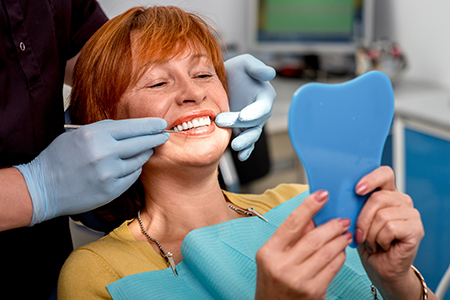
Dentures are removable prosthetic appliances made of artificial teeth set in a gum-colored base that rests on the oral tissues. They replace either several missing teeth (partial dentures) or a full arch of teeth (complete dentures) and are crafted to mimic natural teeth in size, shape, and color so they blend with your smile.
One of the main advantages of removable dentures is access: you can remove them to clean both the appliance and the underlying tissues, which helps maintain oral hygiene. For patients with some healthy natural teeth, a partial denture can fill gaps and prevent unwanted shifting. For those missing all teeth in an arch, a complete denture restores a full dental surface and provides support for the lips and cheeks.
Contemporary dentures benefit from improved base materials, lifelike tooth acrylics, and refined fabrication techniques that improve fit and function compared with older designs. In many cases, we can also combine denture therapy with implants or attachments to provide added retention and stability when appropriate.
Selecting the most suitable denture begins with a careful clinical assessment of your oral tissues, any remaining teeth, and bite relationships. We consider chewing needs, facial support, speech, and aesthetic goals when recommending a partial or complete denture. Each option carries its own design considerations and care protocols.
The two principal categories are full (complete) dentures and partial dentures. Full dentures replace all teeth in an arch; partial dentures replace one or several teeth while relying on the remaining teeth for support. Below are common subtypes and how they differ in daily use and clinical requirements.
Complete dentures are designed to replace an entire upper or lower arch or both. The appliance is custom contoured to the shape of the gums and jaw, and tooth position is selected to support facial aesthetics and efficient chewing. Precise impressions and careful try-ins help ensure the denture balances comfort, retention, and appearance.
A conventional complete denture is made once the remaining teeth have been removed and the tissues have healed. Because it is fabricated after healing, this type often achieves the best long-term fit without the immediate dimensional changes that follow extractions.
Immediate denture
An immediate denture is placed on the same day teeth are removed, so you do not go without teeth during healing. It provides interim aesthetics and function, though adjustments and relines are commonly needed as the gums remodel during recovery.
Overdenture
An overdenture gains stability by fitting over retained tooth roots or specially prepared teeth. The retained roots help preserve bone and provide improved support compared with a standard complete denture.
Implant-supported denture
Implant-supported dentures attach to a series of dental implants placed in the jaw. These attachments greatly increase retention and chewing efficiency and are an excellent option for patients seeking added stability.
Partial dentures replace one or several missing teeth and rely on remaining natural teeth and surrounding tissues for support. They typically use clasps or precision attachments to stabilize the prosthesis and are designed to preserve the position of adjacent teeth while restoring function and appearance.
Modern partial frameworks can be fabricated from a range of materials, including cast metal, flexible resin, and hybrid composites. Material selection is based on the case specifics—strength needs, esthetic preferences, and how the appliance will interact with remaining teeth.
Whether partial or complete, the success of any denture depends on thoughtful design, accurate records, and a collaborative effort between clinician, patient, and dental laboratory.
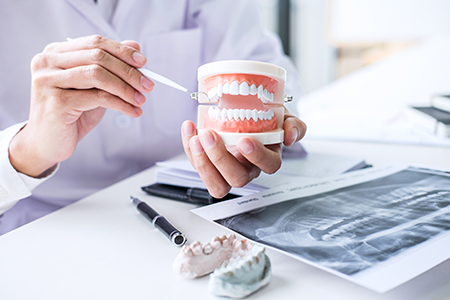
A well-fitting denture begins with a detailed evaluation. We review medical and dental history, assess tissue health and bone support, and take diagnostic images to understand jaw relationships and anatomy. This step tells us whether any extractions or preparatory work will be needed before prosthetic care begins.
When extractions or other preparatory procedures are required, we discuss timing and options so you can make an informed choice. For complex cases, pre-prosthetic procedures such as minor tissue sculpting or socket management can improve the final fit and comfort of the denture. If implant support is being considered, treatment sequencing is coordinated for a seamless experience.
The fabrication phase includes impressions, bite records, and try-ins to refine tooth position, shade, and lip support. We collaborate closely with skilled dental technicians who craft the base and select teeth that match your facial structure and smile goals. Multiple appointments help ensure the prosthesis functions properly before final delivery.
After insertion, we monitor fit and comfort, making adjustments as needed. Proper follow-up care is essential for long-term success; routine checkups let us spot tissue changes early and make timely recommendations, such as relines or repairs, to maintain optimal performance.

Adjusting to a new denture is a gradual process for most patients. In the first days or weeks you may experience minor soreness, increased saliva flow, and slight changes in speech. These reactions are normal and typically resolve as your mouth adapts. We encourage patients to keep wearing their denture as advised and to report persistent problems so we can make targeted adjustments.
Getting comfortable with a new denture
Initial pressure points are common. Wearing the denture and attending scheduled adjustment visits allows us to identify and relieve sore areas quickly. Small changes at these visits often make a big difference in comfort and function.
Temporary increase in saliva
A new appliance can stimulate extra saliva at first. This is a short-term adaptation that usually subsides as your mouth becomes accustomed to the denture.
Speaking clearly again
Practice helps. Reading aloud and speaking in comfortable settings will speed up your confidence with pronunciation and bite coordination.
Eating with your denture
Start with soft, easy-to-chew foods and cut items into small pieces. Use both sides of the mouth evenly and avoid hard or sticky items until you feel fully comfortable. Over time, your ability to chew more challenging foods will improve.
Taking care of your dentures
Rinse dentures after eating and brush them daily with a soft brush designed for prosthetics to remove food and plaque. This prevents staining and bacterial buildup on the appliance.
Brush any remaining natural teeth, gums, and tongue daily to keep tissues healthy. If you have an upper denture, gently clean the roof of your mouth as well.
Remove dentures at night and store them in water or a recommended soaking solution. Allowing the gums to rest supports tissue health and comfort.
Improving retention when needed
Some dentures benefit from supplemental retention methods, such as adhesive, attachments, or implant support. We’ll discuss appropriate strategies to enhance stability based on your anatomy and lifestyle.
Routine follow-up and maintenance
Regular dental visits allow us to evaluate fit, perform adjustments, and monitor the health of any remaining teeth and oral tissues. These checkups are a key part of preserving comfort and function over time.
Relines and repairs
As jawbone and tissue contours change over the years, relines or adjustments may be recommended to restore intimate contact and improve stability. Repairs for cracks or wear are also straightforward when addressed promptly.
Corona Family Dental is committed to helping patients find the denture solution that best matches their needs and expectations. If you’re considering dentures or want to know how a particular option might work for you, please contact us for more information and to discuss next steps.

Dentures are removable prosthetic appliances that replace missing teeth and surrounding gum tissue. They consist of artificial teeth set in a gum-colored base that rests on the oral tissues and restores the dental surface needed for chewing and speaking. Properly designed dentures also provide external support for the lips and cheeks, which helps preserve facial contours and a natural appearance.
Modern dentures benefit from improved materials and fabrication techniques that enhance fit, function, and aesthetics. While they are removable, many dentures are carefully contoured to achieve stable retention against the gums and underlying bone. With regular care and professional follow-up, dentures can be a predictable solution for restoring a complete arch or multiple missing teeth.
Full, or complete, dentures replace all teeth in either the upper or lower arch and are used when a patient is missing an entire set of teeth in that arch. These appliances are custom contoured to the gums and jaw and are designed to balance comfort, retention, and facial support. Partial dentures replace one or several missing teeth and use remaining natural teeth and tissues for support.
Partial dentures often include clasps or precision attachments to stabilize the prosthesis and help prevent unwanted shifting of adjacent teeth. Material choices for partial frameworks range from cast metal to flexible resins, and selection depends on strength, appearance, and how the appliance will interact with the mouth. Both full and partial dentures are planned to meet chewing needs, speech considerations, and aesthetic goals.
A conventional complete denture is fabricated after extractions and tissue healing, which often results in a stable long-term fit once the gums and bone have remodeled. An immediate denture is inserted on the same day teeth are removed to avoid a period without teeth, but it typically requires adjustments and relines as the mouth heals. An overdenture fits over retained tooth roots or prepared teeth to preserve bone and improve support compared with a standard denture.
Implant-supported dentures attach to dental implants placed in the jaw and provide significantly greater retention and chewing efficiency. Implant attachments can be used with both full and partial prostheses and are particularly helpful for patients seeking added stability. The best option depends on oral anatomy, remaining teeth, and the patient’s functional and aesthetic priorities.
Creating a successful denture starts with a detailed evaluation of medical history, oral tissues, and jaw relationships, including any necessary imaging or impressions. When extractions or pre-prosthetic procedures are indicated, the treatment plan outlines timing and sequencing so the prosthesis will fit optimally once delivered. Precise records—impressions, bite registrations, tooth selection, and try-ins—guide the dental laboratory in crafting a denture that matches the patient’s facial structure and smile goals.
Fabrication typically involves collaboration between the clinician and a skilled dental technician to refine tooth position, shade, and base contours during try-in appointments. Multiple appointments allow adjustments before final delivery to optimize comfort and function. After insertion, scheduled follow-up visits are important to monitor fit, relieve sore spots, and make necessary refinements as tissues adapt.
Adjusting to a new denture is usually gradual and may include temporary soreness, increased saliva production, and minor changes in speech. These early reactions are common as the mouth adapts to the new appliance, and most resolve with regular wear and short-term adjustments. It is normal to attend follow-up visits for modifications that relieve pressure points and improve comfort.
Speech and chewing typically improve with practice; reading aloud and starting with soft, small food pieces help speed up adaptation. Using both sides of the mouth evenly and avoiding very hard or sticky foods at first reduces the chance of dislodging the denture. If persistent pain, instability, or difficulty eating or speaking continues, a clinical re-evaluation can identify needed adjustments or alternative retention strategies.
Daily cleaning preserves the appearance of the denture and helps prevent bacterial buildup on the appliance and surrounding tissues. Rinse dentures after eating to remove loose food, and brush them daily with a soft brush designed for prosthetics using a nonabrasive cleanser to avoid scratching the surface. Take care to brush any remaining natural teeth, gums, and tongue daily to maintain overall oral health.
Remove dentures at night and store them in water or a recommended soaking solution to prevent warping and give the gums a chance to rest. Avoid using household bleach or hot water on acrylic bases, and handle the denture over a sink of water or a soft towel to reduce breakage risk if dropped. Regular professional checkups allow cleaning, inspection, and timely repairs when necessary.
Retention can often be improved through careful denture design, precise fit, and adjustments that refine the contact between the denture base and oral tissues. Short-term measures include using a denture adhesive to enhance suction and reduce movement during eating or speaking, while longer-term solutions focus on restorations that change the foundation of support. Relines can restore intimate contact as tissue contours change, improving comfort and function.
For patients seeking greater stability, attachments or implant-supported options provide significant improvement in retention and chewing efficiency. Implant attachments anchor the prosthesis to the jaw, reducing reliance on adhesives and increasing confidence with function. A clinical assessment determines whether implant support or other retention methods are appropriate based on bone availability and overall oral health.
Implant-supported dentures are a strong option for patients who desire enhanced retention and improved chewing efficiency, and who have sufficient jawbone to support dental implants or who are candidates for bone grafting. Good candidates generally have stable general health, healthy gum tissue, and realistic expectations about treatment length and maintenance. A comprehensive evaluation, including imaging, helps determine implant feasibility and the ideal number and placement of implants for support.
Implant-supported solutions can be used for single-tooth replacements, overdentures, or full-arch restorations and are especially helpful for lower dentures that often face stability challenges. While implant therapy requires surgical placement and a healing period, many patients find the resulting improvement in comfort and function worthwhile. Your clinician will review medical history, oral conditions, and care responsibilities to recommend the best approach.
Routine dental visits are important to monitor denture fit, evaluate the health of oral tissues, and check any remaining natural teeth. Many patients benefit from at least annual reviews, though those with rapid tissue changes, recent extractions, or implant components may need more frequent appointments. During these visits, clinicians assess retention, contact points, and the need for relines or adjustments to maintain a comfortable fit.
Relines are recommended when tissue contours change and the denture no longer fits intimately, while repairs should be addressed promptly to prevent further damage or hygienic concerns. Timely relines and repairs restore function and help avoid sore spots, instability, and uneven wear. Your dental team will provide a personalized maintenance schedule based on how your mouth changes over time.
To begin, schedule a consultation in our Bradenton or Sarasota office so we can perform a thorough evaluation of your oral health, discuss your goals, and review appropriate treatment options. During the initial visit we will examine tissues, take any necessary images, and explain the sequence of care whether you need a partial, full, or implant-supported prosthesis. This planning step helps us design a denture that meets your functional and aesthetic needs.
We believe in clear communication and follow-up care to ensure long-term success, including adjustments, relines, and maintenance recommendations tailored to your situation. If you are considering dentures, a consultation will clarify next steps and help you understand what to expect at each stage of treatment. Our team is available to answer questions and guide you through the process with a focus on comfort and predictable results.
Quick Links
Locations